Layers of Violence
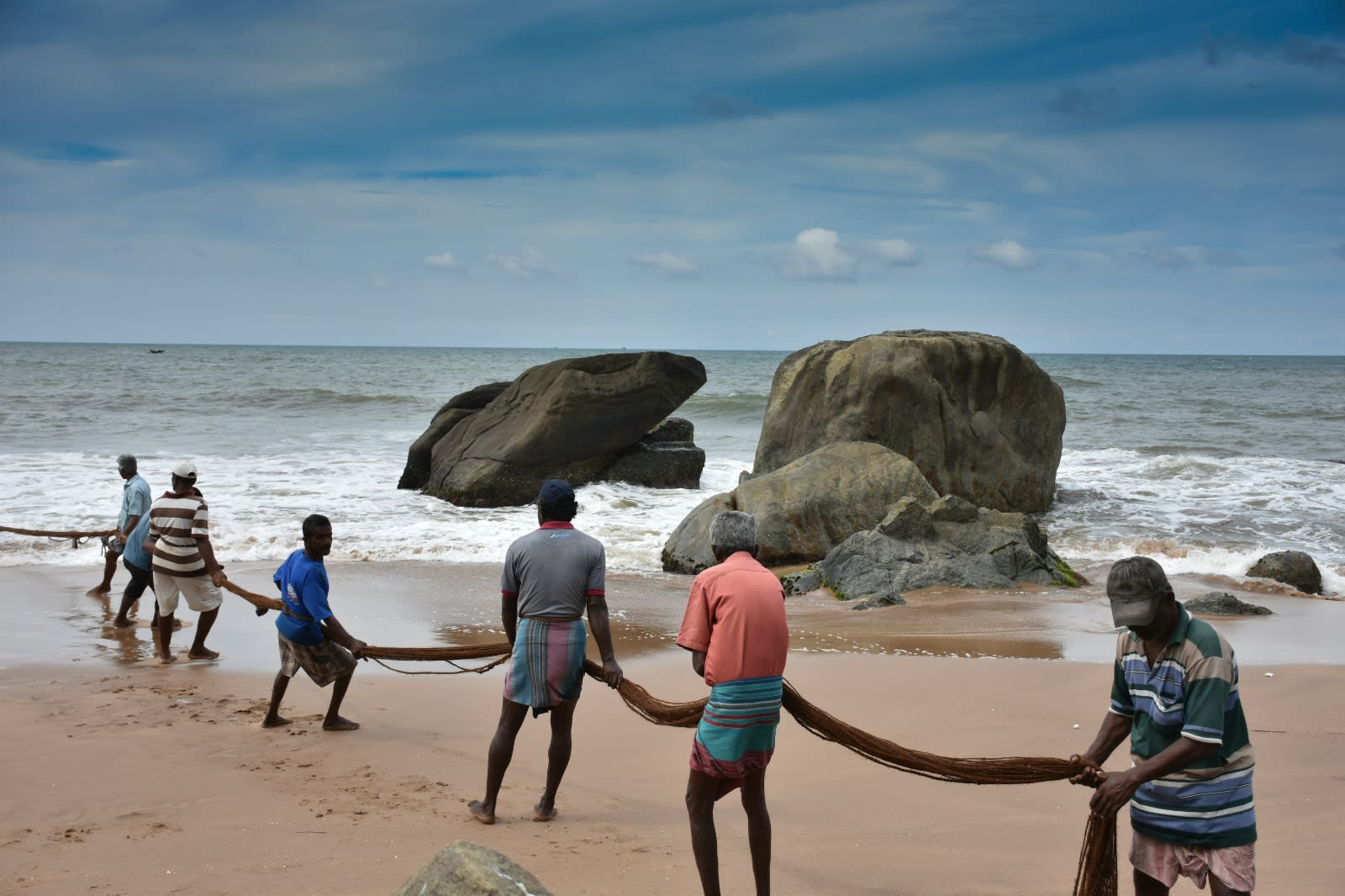
Photo by asif mohomed on Unsplash
The subcontinent has been laced with violence, what now seems like since the start of time. Almost every part of this region has witnessed extreme distress in some form or the other, and continues to see it. Time, like a giant excavator working meticulously through the soil of memory, keeps bringing out layers of blood and silence from beneath. The past we talk about is distant; but it still can be felt, still raw, still breathing.
Sri Lanka, in many ways, is an epitome of this long and brutal continuum. For two decades, what Shekhar Gupta once described as an “enormously brutal yet clinically dramatic” civil war turned the island into a theatre of horror. Corpses floated down rivers, hung from trees, and smouldered by the roadside. There is a folklore that the price of fish had crashed because people feared the fish were feeding on human flesh.
In 1998 a Sri Lankan soldier on trial for murder alleged that hundreds of civilians who disappeared from Jaffna after the 1990s had been secretly killed and buried in Chemmani. Internationally monitored excavations in 1999 uncovered fifteen bodies, confirming only a fraction of the horror that was claimed. Decades later, new excavations in June 2025 have unearthed over 200 skeletons, including those of infants. This has drawn international attention once again.
The Chemmani mass grave is not an isolated incident but the latest in a series of such discoveries that bring the spotlight on Sri Lanka's long and painful history of enforced disappearances and extrajudicial killings. The discovery of more than thirty mass graves since the war’s end in 2009 is a reminder that the war never really left—it only changed its language.
The mass grave has turned into a spectacle. This time, it is even more graphic, as the bodies are large in number. It stirs the public imagination and raises uneasy questions about how they met this fate, how brutal it must have been, and most importantly, who these people are. Appearance of these wells of death, pops a bubble or two in the Sri Lankan society.
The whole country has been put through a process of cosmetic recovery. The recovery was essential, but not by pressing for a total rupture from the past. A November, 2025 article in The Week highlighted that a collective amnesia has begun to settle in Sri Lanka. The new generation, born after the war, has not faced the discriminations or horrors their parents endured. They haven’t experienced a relative going into the war and losing a limb, neither have they realized how it feels like to lose your child in an army airstrike on a school. They have their separate battle to fight. They are seeking job and livelihood and their own comfort. This amnesia is engineered. People are told to move on, to build, to modernize. They are told everything is alright because the country is receiving foreign investments, tourism or cricket, especially the North. The new generation thus have been prompted to observe a rehearsed silence—a national forgetting. As Rudling and Vega Dueñas (2021) note in their study of Colombia’s liquid graves, the act of forgetting is not natural; it is often imposed by layers of necro-governmentality. The government controls who are remembered and who is allowed to disappear.
Amid the euphoria of economic development, thousands of people are still having to run rounds of the court. They are fighting a long and tiring legal battle just for making the government to simply accept the disappearance of their loved ones, mothers of the disappeared holding photographs at protests.
As Juhl and Olsen (2006) remind us, the reconstruction of a society after mass killings depends the state’s institutions and on public trust. A true rebuilding is initiated only by mending the relationships between citizens, between the living and the dead. When the people who are mourning are isolated and not acknowledged it is a sign of denial. It is the responsibility of the government to acknowledge the unfortunate event and bring solace to the affected.
In spite of all the poses of normalcy, calm and order, the discovery of these mass graves appears almost as a form of natural resistance to the “everything is great” narrative. It forces everyone to pause and recognise the ones who were affected, killed, disappeared, or maimed for life. In a country where the legal and bureaucratic systems seem least concerned about the masses that are unnaturally absent, experts say that such discoveries, followed by careful forensic work, can bring some solace to many who still wait for answers.
Excavating those sites and handling all the remains properly will demand a level of resources that is simply scarce in a country like Sri Lanka right now. The lack of a fully equipped DNA laboratory, which could help in tracing identities, makes the process even more complicated. At present, Sri Lanka faces many such challenges — technical, institutional, and emotional. These skeletons are not anonymous; they may be their relatives, their neighbours, their friends. Bodies are evidence, and evidence demands accountability.
In Colombia, the community has taken agency. In the town of Puerto Berrío, community members retrieved mutilated bodies from the Magdalena River, which had become a graveyard for thousands during the decades-long civil war. They were not all relatives. Many were ordinary townspeople and former fighters, yet they came together to recover the bodies, baptize the remains, give them names, and arrange their burials. Even though the identities of most victims remain unknown, the process has offered a measure of relief to families of the disappeared, a small comfort in knowing that maybe a stranger is treating their loved ones with respect. This extraordinary community-level activism is a highly political performance and unsettling for those in power. In response, the government eventually imposed a ban on such practices across Colombia.
The discovery of these graves now stands as a test for the present government of Sri Lanka. It is their responsibility to restore the people’s trust in the system and its institutions, especially given the enormous scale of violence the country has endured. Acknowledgement would be a small but positive start. The question now is: will they offer solace to the families of the missing, or will they respond with a clutter of forensic definitions?
Sri Lanka being on the path of remarkable growth is important not only for the South Asian region but also for its own people. Yet, this progress must unfold while accommodating the memory of the past, because peace without memory is only an intermission.
Juhl, K., & Olsen, O. E. (2006). Societal Safety, Archaeology and the Investigation of Contemporary Mass Graves. Journal of Genocide Research, 8(4), 411–435.
Rudling, A., & Vega Dueñas, L. (2021). Liquid Graves and Meaning Activism in the Colombian Armed Conflict: The ‘Bottom-Up’ Recovery and Memorialisation of Victims of Forced Disappearance. Journal of the British Academy, 9(s3), 121–137.
Manimekalai, Leena, director. White Van Stories. Leena Manimekalai, 2015.